
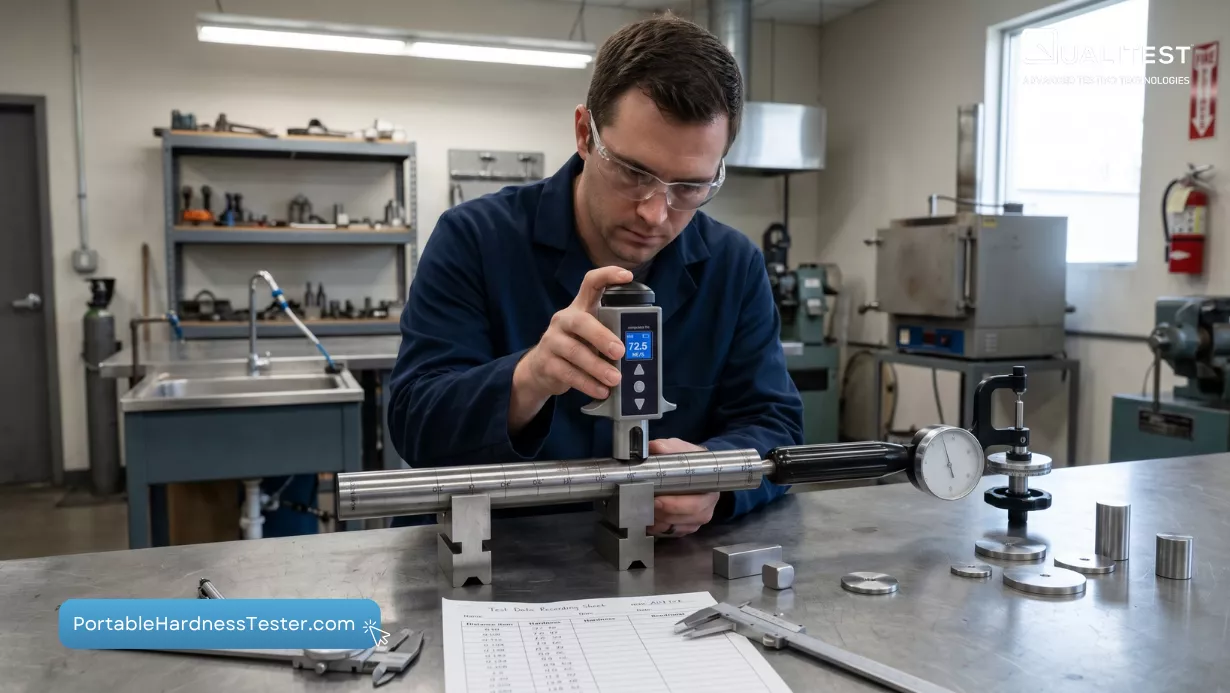
Steel hardenability testing identifies how deep a part hardens after heat treatment. This parameter influences the selection of materials for structural and mechanical components. Researchers recently reviewed a portable Jominy apparatus designed to evaluate AISI 1045 steel. This setup offers a compact alternative for metallurgical laboratories.
Why Jominy Testing Still Matters in Heat Treatment Evaluation
Standardized testing remains a requirement for predicting material behavior. The Jominy end-quench test evaluates how steel responds to different cooling rates along a single specimen. This data allows engineers to understand how a specific alloy performs during various quenching processes.
Why the Study Focused on Portable Jominy Equipment
Traditional testing equipment often occupies significant floor space and lacks mobility. Researchers noted that older designs were sometimes difficult to move or adjust within a laboratory setting. A portable, simplified setup addresses the need for ergonomic and accessible testing tools in smaller facilities or training centers.
How the Portable Jominy Apparatus Was Designed
The equipment features a compact steel frame measuring 64 by 82 by 64 centimeters. It incorporates a 200-liter water drum and a dedicated water pump to manage the quenching process. Piping and a specimen holder allow for controlled cooling, providing a tool for consistent hardenability measurements.
How AISI 1045 Steel Was Tested
The study used AISI 1045, a common medium carbon steel. Specimens were heated to 900 degrees Celsius and held at that temperature for 30 minutes. Following the heating phase, the parts were quenched using either water or oil. The team then measured the results using the Rockwell B method with a 150 kgf load and a 15-second dwell time.
What the Hardness Results Showed
Testing confirmed the effectiveness of the portable apparatus. Untreated raw material showed a hardness of 91.00 HRB. Water quenching increased this value to 101.33 HRB, while oil quenching resulted in 100.33 HRB. These figures demonstrate that both quenching media significantly change the material properties.
Water vs Oil Quenching: Professional Takeaways
Water provides a faster cooling rate, which leads to a more pronounced hardening effect. While oil resulted in slightly lower hardness, it remains a common choice because it reduces the risk of part distortion. The portable equipment accurately reflected these differences in cooling performance.
Why This Study Matters for Labs and Equipment Buyers
This research shows that a portable setup produces useful hardenability data. It provides an option for facilities with limited space or budgets. Technical teams can use these tools for practical testing and training without the high costs associated with larger, stationary systems.
Limitations and Practical Considerations
The results presented focus on one specific steel grade. While the data is useful, engineers should validate the equipment for other alloys and heat treatment scenarios. The study serves as a practical demonstration of equipment functionality rather than a universal standard for all materials.
Conclusion: A Practical Direction for Hardenability Testing
Portable Jominy equipment makes hardenability evaluation more accessible. The study demonstrates that a lower-cost, mobile apparatus provides the data needed for practical lab use and education. This approach simplifies the testing process for metallurgical professionals.
Reference:
, R., Arif, Z., , S., & Widodo, S. (2024). Innovative Jominy Test Equipment for Evaluating The Hardening Of AISI 1045 Steel. JURUTERA – Jurnal Umum Teknik Terapan. https://doi.org/10.55377/jurutera.v11i02.10937.
Leave a Reply